From Sofa to Start Line: Building Fell Fitness in Six Honest Weeks
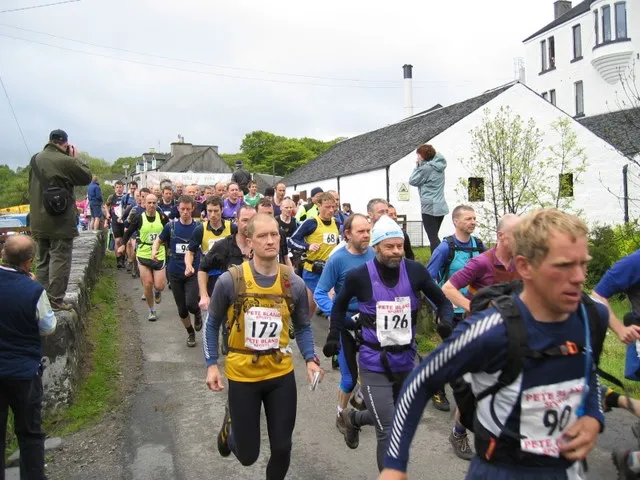
Photo: Andrew Curtis, CC BY-SA 2.0, via Wikimedia Commons
There's a moment, about forty seconds after you hit 'confirm payment' on an adventure race entry, where the excitement curdles into a very specific question: can I actually do this?
Good news — probably yes, and six weeks is enough to make a real difference, provided you spend those weeks sensibly. Bad news — sensibly means a lot of unglamorous walking uphill and far fewer heroic gym sessions than Instagram would suggest.
Here's a plan built for UK conditions and UK terrain. It assumes you can currently walk for an hour and jog for ten minutes without incident. Adjust from there.
The shape of the six weeks
- Weeks 1–2: Base. Build time on feet, wake up the legs, start strength work.
- Weeks 3–4: Build. Add hills, add a long day out, keep strength going.
- Week 5: Sharpen. Race-pace efforts, kit rehearsal, start backing off volume.
- Week 6: Taper. Cut volume hard, keep a bit of intensity, sleep like it's your job.
That's it. No two-a-days, no 5am cult nonsense. Three to four sessions a week plus one long outing is plenty for a first event.
Week by week, roughly
Week 1. Two easy 40-minute runs or walk-runs, one 90-minute walk, two 20-minute strength sessions. Yes, strength from week one — it's the bit everyone skips and the bit that saves your knees on descents.
Week 2. Same, but stretch the long walk to two hours and add 5 minutes to one run. Include some stairs or a hill rep or two, walked fast if needed.
Week 3. One hill session: 6 × 2 minutes uphill at a hard-but-controlled effort, walk down between. One easy run. One long day out of 3–4 hours on actual uneven ground. Two strength sessions.
Week 4. The big one. A 4–5 hour day out with your race pack, on the sort of terrain your event uses. If it's a fell race, get on a fell. If it's a duathlon with a bike leg, ride the rough stuff. Two short runs, two strength sessions, and an easy week for the legs afterwards.
Week 5. Shorten the long day to 2 hours. Do one session at race effort — not race distance, just race feel. Do a full kit rehearsal. Keep strength but drop to one session and cut the volume.
Week 6. Two easy 20–30 minute jogs early in the week, one short sharpener (4 × 1 minute uphill) midweek, then rest. Eat properly. Sleep. Don't go for a 'confidence-boosting' 15-mile walk on the Friday.
Hill fitness is mostly time on feet
Fell races and multi-activity events punish two things: climbing and descending. Climbing you can train on any slope, including a treadmill on incline or a long flight of steps. Descending is the sneaky one — it wrecks quads that haven't met a gradient since summer.
So walk downhill too. Deliberately. On rough ground. With a pack. And if you can, get out on the actual terrain type: peat, scree, tussock, mud, wet rock. A tarmac canal path won't prepare you for the Rhinogs.
The strength work that earns its keep
Two 20-minute sessions a week, bodyweight or a pair of dumbbells. Keep it boring:
- Split squats and step-ups (single leg, controlled)
- Calf raises, including bent-knee versions
- Single-leg Romanian deadlifts for hamstrings and balance
- Press-ups and rows for the poles-and-pack upper body
- Side planks and dead bugs — trunk stability pays off on descents
Three sets of eight to twelve, no drama, no maxing out.
Rehearse the kit, not just the legs
This is where first-timers lose the most time on race day. Do at least two full kit runs in week 4 and week 5.
- Wear the exact shoes, socks and pack you'll race in. Find the hot spots now.
- Test your waterproofs in real rain, not in the shop. Check the hood doesn't flap and the jacket doesn't ride up under a pack.
- Practise eating and drinking on the move. Flasks you can't open with cold hands are a design flaw you want to discover in training.
- Sort your mandatory kit list early. Fell races and adventure events are strict about it, and a bothy bag, map, compass and foil blanket all add up.
- Practise the transition if there is one. Wet, cold hands and a bike helmet are a bad combination to meet for the first time at speed.
Recovery isn't a bonus week
Sleep is the training. Aim for it, don't negotiate with it. Take at least one full rest day a week, keep easy days genuinely easy — if you can't hold a conversation, you're going too hard on a recovery run — and eat enough, especially carbohydrate, on the long-day weeks. A sports massage in week 5 is nice; a sports massage that reveals a niggle in week 6 is a problem.
Red flags that mean back off
- Pain that's sharp, one-sided, or in a bone (shin, foot, hip). That's not 'character building'.
- Niggles that get worse through a session rather than easing off.
- Resting heart rate steadily climbing, sleep going bad, mood flat. Your body is telling you something.
- Any injury you're taping up before every run. See a physio, not a YouTube video.
Missing one session costs you nothing. Missing four weeks with a stress fracture costs you the race.
Realistic expectations
Six weeks won't turn you into a fell runner. It will make you finishable — able to keep moving, manage your effort, and not blow up at the first climb. Aim to finish comfortably rather than heroically. Walk the steep bits. Eat before you're hungry. Save something for the last descent.
And then, after the finish line and the slightly emotional flapjack, book the next one. That's how it goes.