Feet First, Summit Second: The UK Ground Check That Beats a Bad Decision
Most adventure films start at the summit, the lip of the drop, or the moment the GoPro gets clipped on. That is the wrong place to start. The decision that actually keeps a UK adventure day on the right side of brilliant happens much lower down, under your soles. Ground is the one part of the plan you can check in real time, and it is usually the part that changes fastest.
A five-minute ground check will not make you bulletproof. It will, however, stop you from committing to a surface that is quietly telling you no. Here is how to read it without turning every outing into a risk assessment spreadsheet.
Why the ground gets the final vote
UK adventure days get planned around weather, tides, daylight and train times. All sensible. But the ground is where those plans meet reality. Wet gritstone behaves differently from dry gritstone. Chalk crumbles. Mud hides roots and rocks. Coastal slab can go from friendly to ice-rink with a bit of algae and spray. The point is not to be timid. The point is to match the plan to the surface you are actually standing on, not the one you imagined in the car park.
The five-minute check
1. Boots and soles: 60 seconds
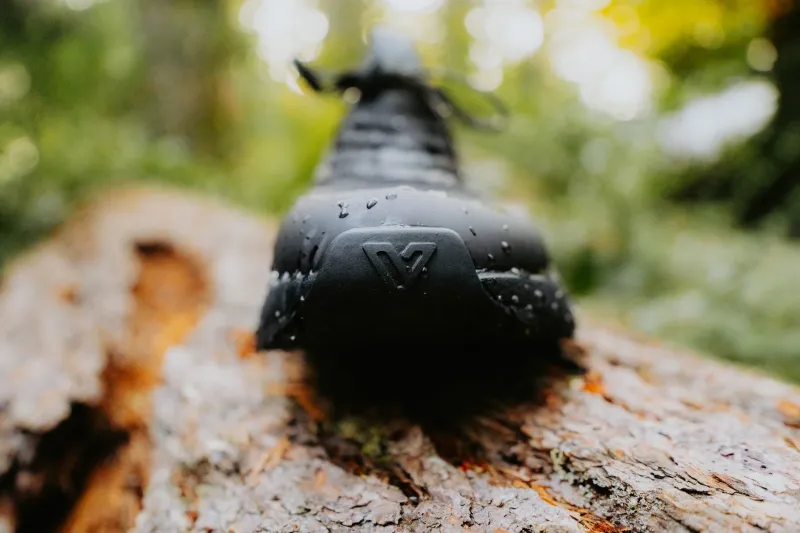
Start with what is already on your feet. Are your lugs packed with mud? Are you in approach shoes on wet grass? Is that rubber actually meant for smearing on slab, or are you asking a trail shoe to do a climbing shoe's job? If you are sliding on flat tarmac before the path even starts, that is data. Adjust the plan before you add exposure.
2. Surface texture: 90 seconds
Look, then test carefully. Dry gritstone can feel almost velcro-like; wet gritstone, especially polished popular routes, can feel like a different sport. Chalk is fragile and undercut by the sea. Limestone pavement gets greasy after rain. Granite slab is superb when dry and slick when damp with algae. Mud is the great unknown. Use a boot rub or a pole, not a hopeful hand, especially near edges.
3. Slope and consequence: 90 seconds
Angle matters, but consequence matters more. A steep grassy slope with a soft run-out is a different proposition from a gentler wet slope above rocks or a drop. Ask the blunt question: if I slip here, where do I stop? If the answer is 'over the edge' or 'into the sea', the ground has already made your decision for you. Change the line.
4. Escape routes: 60 seconds
Identify two ways off the ground you are about to commit to. If the only exit is the way you came, that is fine when it is easy ground. It is not fine when the way you came is the crux. A bail-out plan is not pessimism. It is the skill that lets you enjoy the rest of the day.
That is the whole check. Five minutes, four questions, one honest answer.
Six UK settings, six verdicts
Wet gritstone, Peak District
Dry gritstone is friendly. Wet gritstone is a negotiation. After rain, busy edges can be polished and unforgiving. If you are on a grade you cannot comfortably downclimb, do not commit upwards. Pick a drier crag, a walk, or come back another day. The rock will still be there.
Chalk coast, Sussex or Yorkshire
Chalk is not most people's climbing surface; it is a crumbling edge with a sea view. Check for undercuts, recent falls and tide. Stay well back from the lip. If the ground sounds hollow underfoot, retreat. No summit is worth a cliff collapse.
Muddy woodland, anywhere after a storm
Mud is the great liar. It hides roots, rocks and holes, and it makes every step slower than the map suggests. Test with a pole. If you are sinking past the ankle, build in a time buffer and lower your distance ambitions. Muddy woodland is brilliant fun when you respect it and miserable when you fight it.
Coastal granite slab, Cornwall or Pembrokeshire
Dry granite slab is a delight. Damp, algae-covered slab is a slip waiting to happen. Check tide and spray before you commit. If the slab is dark and damp, save it for another day. There is no shame in walking away from a surface that is asking for better conditions.
Limestone pavement, Yorkshire Dales
Clints and grykes are beautiful and ankle-hungry. Wet limestone is greasy, and a misplaced foot can wedge between blocks. Watch where you put your feet, use poles carefully, and do not treat pavement as a flat motorway. It is not.
Wet grassy fell, Lake District or Snowdonia
Grass is the quiet hazard. Steep wet grass above a drop is no place to test your confidence. If the descent feels sketchy, choose a different line or a different hill. The fell will still be there when the ground is drier.
What to do with the answer
If two of the four checks fail, downgrade the day. If one fails but the consequence is high, downgrade anyway. Have a Plan B in your pocket: a lower route, a drier crag, a shorter loop, a pub with a fire. The best UK adventure days are the ones you can talk about afterwards without a hospital bracelet. The ground check takes five minutes. It can save you hours.