Your Nerves Aren't One Big Tank: Matching a UK Adventure to the Fear You Actually Fancy
There's a lazy assumption in adventure booking that fear is a single dial. Turn it up for a bigger day out, turn it down for a gentler one. In reality, most people don't have one nerve tank. They have a handful of smaller accounts, and a day that empties the wrong one can feel miserable even when the photos look brilliant.
I've had days where the exposure was fine but the cold water made me want to teleport home. I've watched confident climbers go quiet on a zip line because speed, not height, was the thing that got them. And I've seen groups talk themselves into a tougher route because nobody wanted to be the one who said the obvious thing out loud.
So before you spend £80, £180 or a whole weekend on a UK adrenaline day, it's worth doing a quick nerve audit. Not to talk yourself out of anything, but to spend your fear where it buys you the most fun.
The five accounts most adventure days draw from
Most UK adventure activities pull from a mix of these:
- Exposure and height — via ferrata, climbing, high ropes, cliff edges, zip lines.
- Cold and water — coasteering, gorge walking, wild swimming, winter dips.
- Speed and impact — zip lines, mountain biking, powerboat rides, downhill tracks.
- Darkness and enclosure — caves, night navigation, narrow gorges, headtorch sections.
- Social performance — being watched, being the slow one, being the nervous one in a group.
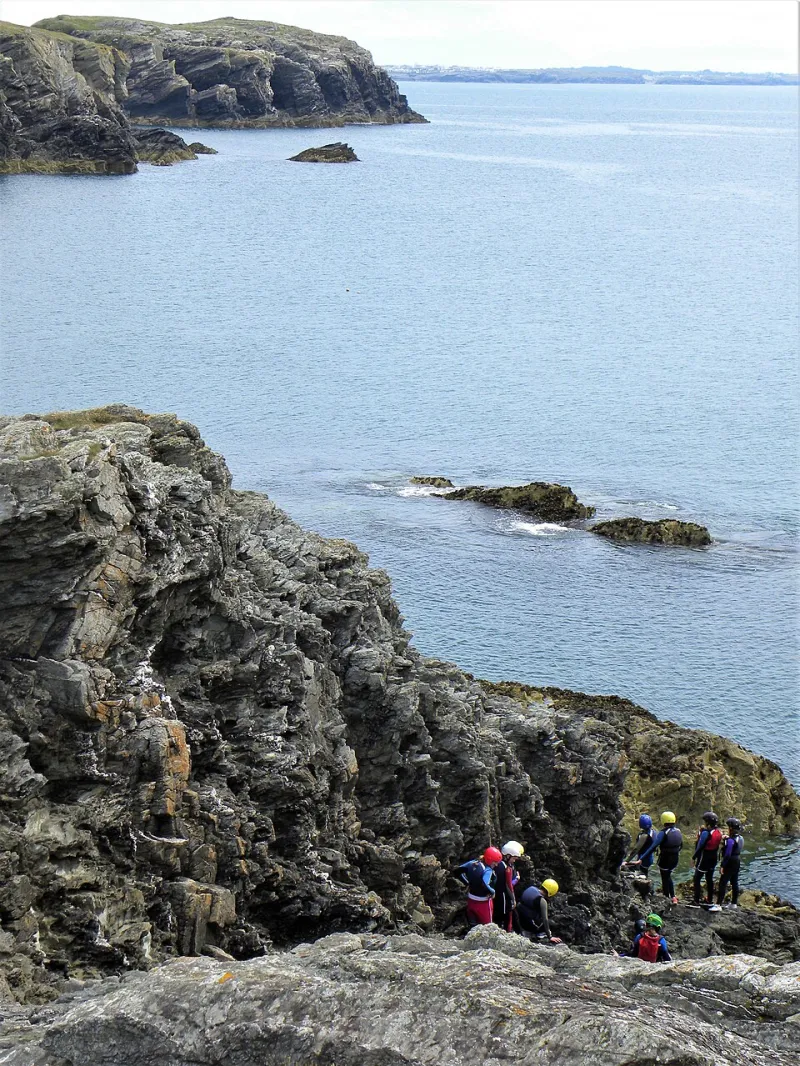
A coasteering session in Pembrokeshire might draw from cold, water, height and social pressure all at once. A via ferrata day in the Lakes is mostly exposure plus a bit of height and endurance. A big zip line is short, sharp speed and exposure. A winter fell day is cold, navigation and the quiet pressure of keeping moving when the light goes.
None of those is objectively scarier. They're just different purchases.
Score the accounts before you book
Take five minutes and give yourself an honest 1 to 5 for each account, where 1 is 'barely registers' and 5 is 'I'd rather not, thanks'. Then look at the activity you're considering and ask which accounts it will charge.
A useful rule: let one account run high, keep the rest moderate or low. If you're already stretched by cold water, adding darkness, exposure and a competitive group is not a growth experience — it's just an expensive way to have a bad time.
This isn't about avoiding challenge. It's about choosing a challenge with a clear edge. You want the thrill of spending something, not the dull panic of being overdrawn.
Read the operator's intensity, not the brochure
Adventure operators are generally careful, but marketing language is not a difficulty grade. 'Ultimate', 'extreme' and 'unforgettable' tell you almost nothing. Look for the boring details:
- Ratio and briefings — how many participants per instructor, and how long the safety brief actually is.
- Challenge by choice — can you opt out of a jump or section without derailing the group?
- Escape routes — what happens if someone gets cold, scared or tired halfway through?
- Kit quality — well-fitted helmets, buoyancy aids and wetsuits matter more than a shiny website.
- Weather policy — will they move or cancel a session if conditions shift?
If you can't find those answers, ask before paying. A good operator will answer plainly. A vague one is telling you something.
Group dynamics are part of the price
A lot of UK adventure days are sold as shared experiences, and that's often the best bit. But groups have their own weather. A mixed-ability group with one loud 'let's go bigger' voice can turn a sensible day into a low-grade pressure cooker.
Before booking, ask how groups are matched. Is it a fixed session where everyone does the same route, or can the instructor split the group? Is there a minimum fitness or swimming requirement? Will there be children or stag parties in the same slot? None of those are deal-breakers, but they change what you're buying.
If you're the nervous one, say so early. Not in a dramatic way — just 'I'm up for this, but I'd like to know where the opt-outs are'. Good instructors appreciate it. Good groups settle down when someone names the elephant.
Match the day to the account you want to spend
Here's how a few popular UK options tend to charge the nerve accounts:
- Coasteering — cold, water, some exposure and social pressure. Brilliant if you want a full-body challenge, but pick a milder session if cold is your 5.
- Via ferrata — exposure and height, with sustained effort. The cable makes it feel secure, but the drop still counts.
- Zip lines — short speed and exposure hit, often with a big social audience. Good if you want a sharp shock rather than a long grind.
- Winter fell days — cold, navigation, endurance and darkness. Less about a single fright, more about cumulative load.
- Gorge walking — water, cold, enclosure and teamwork. A sleeper favourite, but not a gentle introduction if you hate being wet.
The exit-route test
Before you book, imagine the moment you want out. Not because you're failing, but because knowing your exit is what lets you relax into the day.
Can you walk off the route? Is there a lower line? Can the instructor shorten the session? Is the car park close enough to bail without ruining everyone's day? If the only answer is 'you'll be fine', ask again. A clear exit doesn't make you less adventurous. It makes you easier to be adventurous with.
Your nerve budget is finite, and that's fine. Spend it on the account you actually want to stretch, keep the others topped up, and pick the day that feels exciting rather than merely expensive.